第 1 單元,第 1 課
Earthquake Risks地震風險
這課一眼看
Where earthquakes happen地震發生的地方
- stress應力: Force that pushes, pulls, or twists rock.
- epicenter震央: Point on the surface directly above where an earthquake starts.
Measuring earthquakes測量地震
- magnitude規模: Amount of energy an earthquake releases.
- seismograph地震儀: Instrument that records earthquake waves.
- Richter magnitude scale芮氏規模: Rates magnitude from seismograph wave height.
- moment magnitude scale地震矩規模: More accurate magnitude scale using fault size and slip.
- intensity震度: How strongly the ground shakes at a place.
- Modified Mercalli Intensity scale修訂麥加利震度表: Rates intensity I–XII by effects on people and buildings.
Earthquake hazards地震的危害
- resonance共振: Strong vibration when waves match an object’s natural rhythm.
- liquefaction土壤液化: Wet soil acting like a liquid during shaking.
1Where earthquakes happen地震發生的地方
AEarthquakes and plate boundaries地震與板塊邊界
- Forces inside Earth push and pull on rocks, building up stress. Rocks bend or stretch until the stress is too great; then they break and slip along a fault, releasing energy as an earthquake.地球內部的力量推拉岩石,累積應力。岩石會彎曲或伸展,直到應力太大時破裂,沿著斷層滑動,以地震的形式釋放能量。
- A world map of earthquakes shows that most of them happen along plate boundaries. Earthquakes are rare in the middle of a plate.世界地震分布圖顯示,大部分地震都發生在板塊邊界上,板塊中央很少發生地震。
- Earthquakes can start anywhere from Earth’s surface to more than 600 km deep. The point on the surface directly above where the earthquake starts is the epicenter.地震可以發生在從地表到超過 600 km 深的任何地方。地震開始處正上方的地表位置稱為震央。
2Measuring earthquakes測量地震
AMagnitude scales規模
- Magnitude describes the amount of energy an earthquake releases. A seismograph records the shaking as wavy lines; bigger earthquakes make taller lines.規模描述地震釋放的能量大小。地震儀把震動記錄成波形,地震越大,波形越高。
- On the Richter magnitude scale, each increase of 1 means 10 times more ground shaking and about 32 times more energy released. A magnitude 6 earthquake releases about 32 × 32 ≈ 1,000 times more energy than a magnitude 4.在芮氏規模中,每增加 1,地面震動增為 10 倍,釋放的能量約增為 32 倍。規模 6 的地震釋放的能量約是規模 4 的 32 × 32 ≈ 1,000 倍。
- The moment magnitude scale gives a more accurate measurement of large earthquakes. It considers the size of the fault that breaks, how far the rock moves, and the strength of the rock.地震矩規模對大地震的測量更準確。它考慮破裂斷層的大小、岩石移動的距離以及岩石的強度。
注意
The largest earthquake ever recorded was a magnitude 9.5 in Chile in 1960.有紀錄以來最大的地震是 1960 年智利的規模 9.5 地震。
BIntensity and damage震度與災害
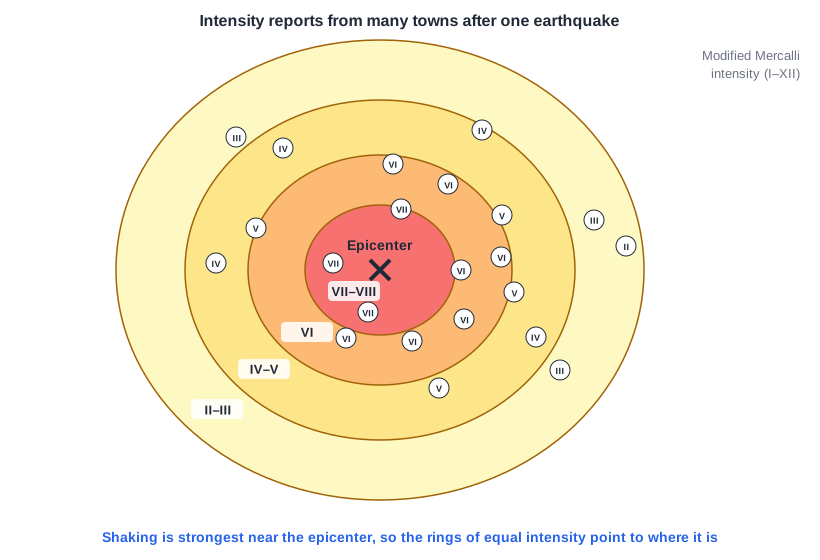
- Intensity describes how strongly the ground shakes at a particular place, judged by its effects on people and buildings. The Modified Mercalli Intensity scale runs from I (not felt) to XII (total destruction).震度描述某個地點地面搖晃的強烈程度,依據對人和建築物的影響來判斷。修訂麥加利震度表從 I(無感)到 XII(全毀)。
- One earthquake has one magnitude, but many intensity values: shaking is usually strongest near the epicenter and weaker farther away. Mapping intensity reports can help locate the epicenter.一個地震只有一個規模,卻有許多不同的震度:通常震央附近搖得最厲害,距離越遠越弱。把各地的震度畫成圖,可以幫助找出震央。
Measuring earthquakes測量地震
| Scale震級/震度 | What it measures衡量什麼 | How it is measured如何測量 | Range範圍 |
|---|---|---|---|
| Richter magnitude芮氏規模 | Energy released釋放的能量 | Height of seismograph waves地震儀波形高度 | 0 and up; +1 = 10× shaking0 以上;每 +1 震動大 10 倍 |
| Moment magnitude地震矩規模 | Energy released (more accurate)釋放的能量(較準確) | Fault size, slip, rock strength斷層大小、滑移量、岩石強度 | 0 and up0 以上 |
| Modified Mercalli修正麥加利震度 | Intensity (shaking at a place)強度(某地搖晃程度) | Effects on people and buildings對人與建築的影響 | I to XIII 到 XII |
3Earthquake hazards地震的危害
ADamage to buildings and ground建築物與地面的破壞
- Buildings can collapse when ground floors fail and the upper floors fall onto each other, called pancaking. Tall buildings can sway violently if seismic waves match the building’s natural swaying rhythm, an effect called resonance.當一樓支撐失效、上方樓層層層壓落時,建築物會崩塌,稱為「鬆餅式」倒塌。如果地震波和高樓自然搖擺的節奏相同,高樓會劇烈搖晃,這種現象稱為共振。
- Shaking can make wet, loose soil act like a liquid: liquefaction. Buildings on such soil can sink or tip over. Shaking can also trigger landslides on slopes.搖晃會讓潮溼、鬆散的土壤像液體一樣流動,稱為土壤液化。蓋在這種土壤上的建築物可能下沉或傾倒。搖晃也可能在坡地上引發山崩。
- An earthquake under the ocean can push the seafloor up and create a tsunami. In deep water the wave is short and fast, but near shore it slows and grows much taller.海底地震會把海床往上推而產生海嘯。在深海中,海嘯波高很低、速度很快;接近海岸時變慢,並長得非常高。
4Earthquake risk and safety地震風險與安全
APredicting and preparing預測與準備
- An area’s earthquake risk depends on how often it has had earthquakes. California, Oregon, Washington, and Alaska, which lie near active plate boundaries, have the highest risk in the United States.一個地區的地震風險取決於它過去多常發生地震。加州、奧勒岡、華盛頓和阿拉斯加靠近活躍的板塊邊界,是美國地震風險最高的地方。
- Scientists can say where earthquakes are likely, but they cannot predict exactly when one will happen or how strong it will be. Earthquakes at Parkfield, California, seemed to come about every 22 years, yet the predicted quake came years late.科學家可以指出哪裡比較可能發生地震,卻無法準確預測何時發生或有多強。加州帕克菲爾德的地震看起來大約每 22 年發生一次,但預測的地震晚了好幾年才發生。
- The best defense is preparation: building codes, buildings designed to absorb shaking, early-warning systems, avoiding construction on loose soil, and emergency plans.最好的防禦是事先準備:建築法規、能吸收震動的建築設計、預警系統、避免在鬆軟土壤上蓋房子,以及緊急應變計畫。
自我檢查
If a city had a big earthquake last year, is it now safe from earthquakes for a long time?如果一個城市去年發生過大地震,接下來很長一段時間就安全了嗎?
看答案
No. Past earthquakes show that an area is at risk, so more earthquakes are likely there in the future. Scientists cannot say exactly when.不是。過去發生過地震,表示這個地區有風險,未來很可能還會再發生,只是科學家無法說準時間。
這課的重點字
- stress應力
- epicenter震央
- magnitude規模
- seismograph地震儀
- Richter magnitude scale芮氏規模
- moment magnitude scale地震矩規模
- intensity震度
- Modified Mercalli Intensity scale修訂麥加利震度表